Assembling compost
I have just had a very special moment in the garden.
Although I experienced this ‘moment’ today in the afternoon, the truth is that it started back in November 2025*, when I learned in my Permaculture Design Certificate course, a two-week intensive at the beautiful Brogo Permaculture Gardens, about Berkley’s hot compost.
When I returned home, I worked with another student from the course on building my own. Well, three it turned out. I had so much material in the garden, including harvested greens from a big garden clean out, that there was enough for three separate piles. The first was perhaps the most textbook example of the Berkley method. It was hot and steamy for weeks. The other two didn’t have the same perfect quantities of the carbon:nitrogen layering, but they cooked along nicely enough.
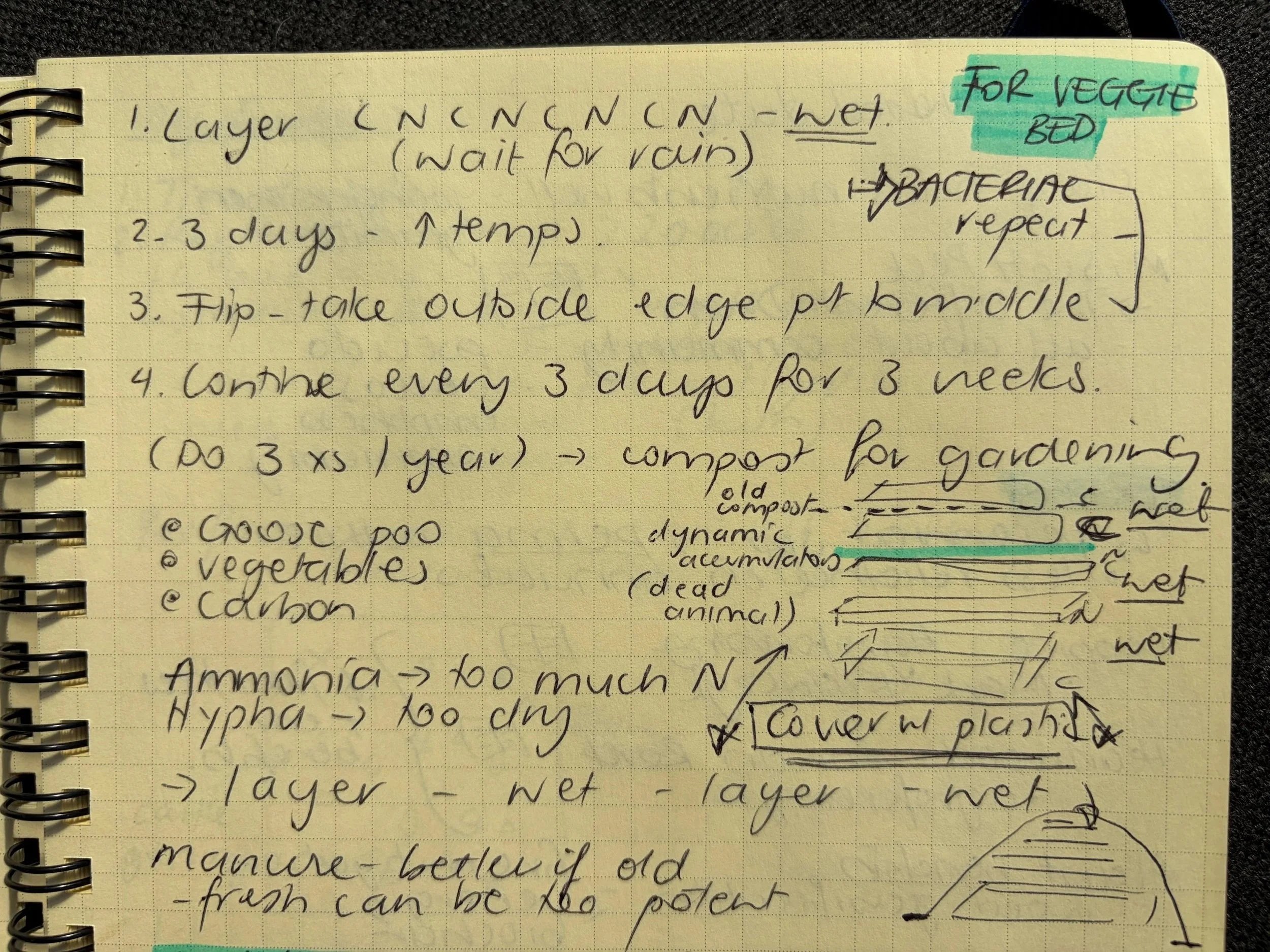
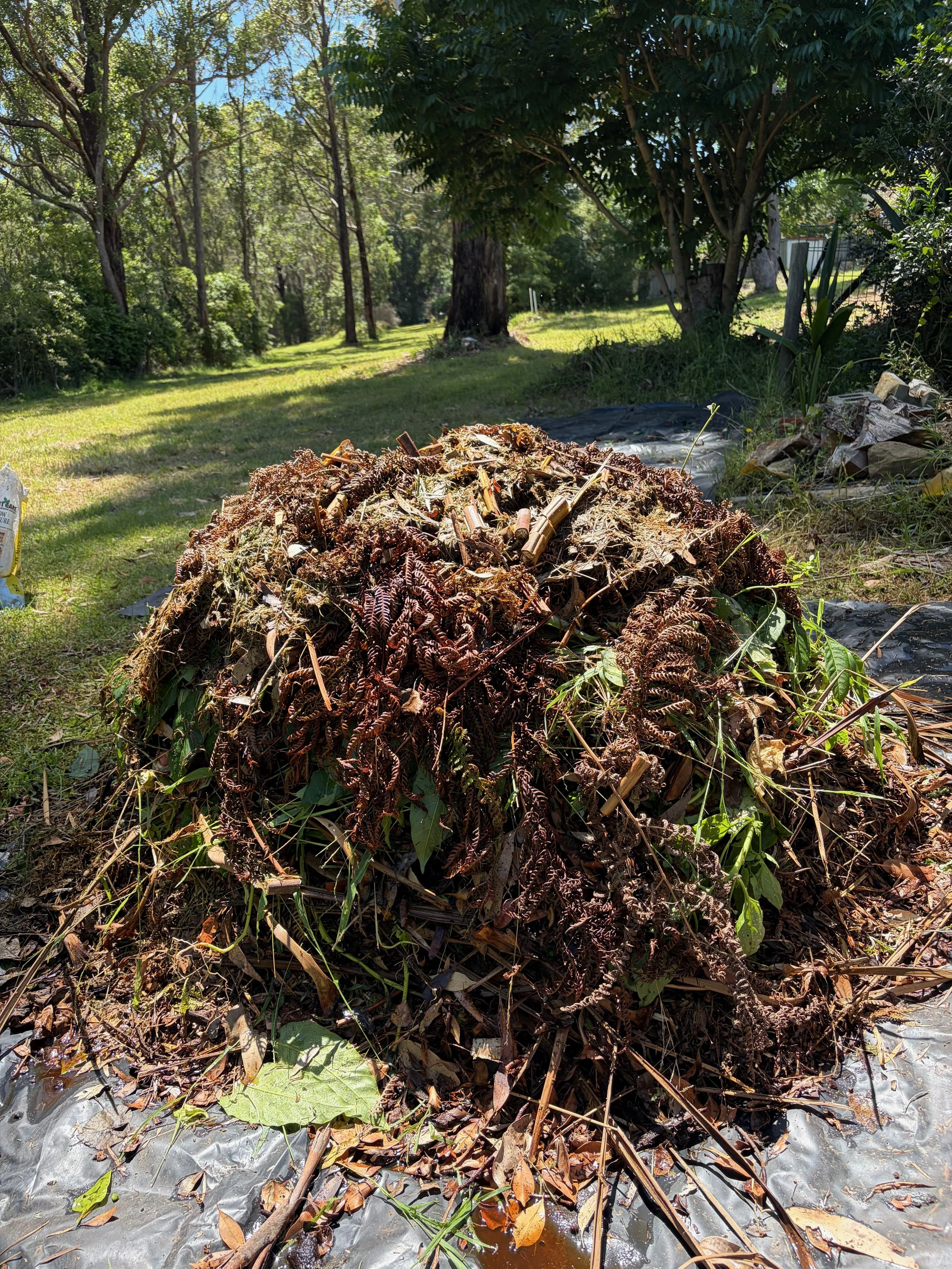
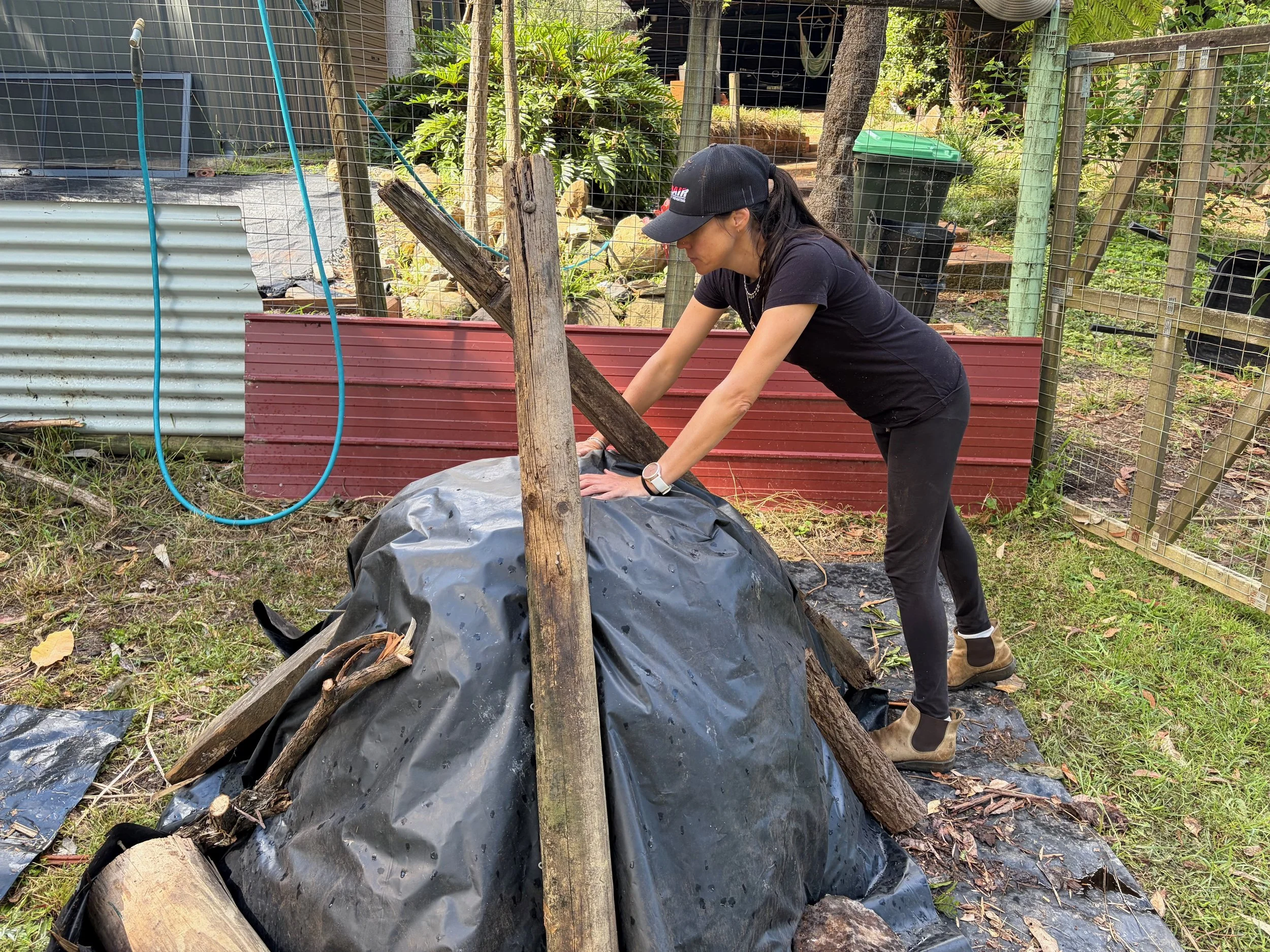
We compiled the three piles into one, which was then moved to a handy location in the garden.
I won’t say it really felt like ‘compost’ at the time. Some of the material was large, and so it was more like a combination of mulch and compost. But there was definitely fungus, worms and plenty of insects moving around. I left the pile to continue it’s processes of decomposition until this weekend, four months later, when I finally pulled out my summer crops (which are now part of a new hot compost) and had vegetable beds ready for compost.
When I was spreading the compost out, over what will become my salad garden^ , I felt elated that this compost emerged from my acts of assembling relations between my energy, more-than-human life and the physical elements of the garden; that I had a hand in this rich, gorgeous, nourishing product, in which I will be growing food.
I was so deeply moved in this moment, to be participating in these relations in this way, to be inolved in creating something that I know is regenerative and important for the earth. It felt like an amazing co-produced achievement with the more-than-human world.
Now, I will confess that the experience of co-creating the compost was not as beautiful as this particular moment! It’s actually hard work, layering the materials, wetting it all down, ‘tickling’ it out so that the pile is stable, and then regularly turning this big heavy pile with a pitch fork every three days. I’ve also been wondering if the black plastic I’ve been using in my composting activities might have encouraged a recent red-belly black snake visit.
But this experience of enriching my soil with the compost will absolutely motivate me to continue with this method. It really was such a thrill to be participating in life this way. I am excited to see how the new seedlings will grow, and will be delighted each time I pick greens from the garden, knowing that their nutritional value is in part due to the ways I’ve mixed my own energies with life in the garden.
I feel so grateful to all of the incredible organisms who have co-created this product. The second principle of permaculture is to ‘Catch and store energy’. I had been thinking I would need to import some soil to my vegetable garden beds, but this experience has been so valuable in teaching me that with the right knowledge and application of energy, me and the garden can provide what we need.
*I have been reading about ‘timescapes’, and am thinking about time differently. I guess here, I am realising that this moment could only have existed through infinite other moments, which just so happened to express themself in this way, in today’s moment. That is, the compost embodies a history of other moments, which are interdependent with this moment today. Without those other moments, the compost would not have existed, and so it feels odd to not acknowledge or account for that history here - the composting example is a good way to think about those relations.
^ See a link to my permaculture concept plan here; thanks Robyn and Chris for co-designing with me.