Decolonising my diet
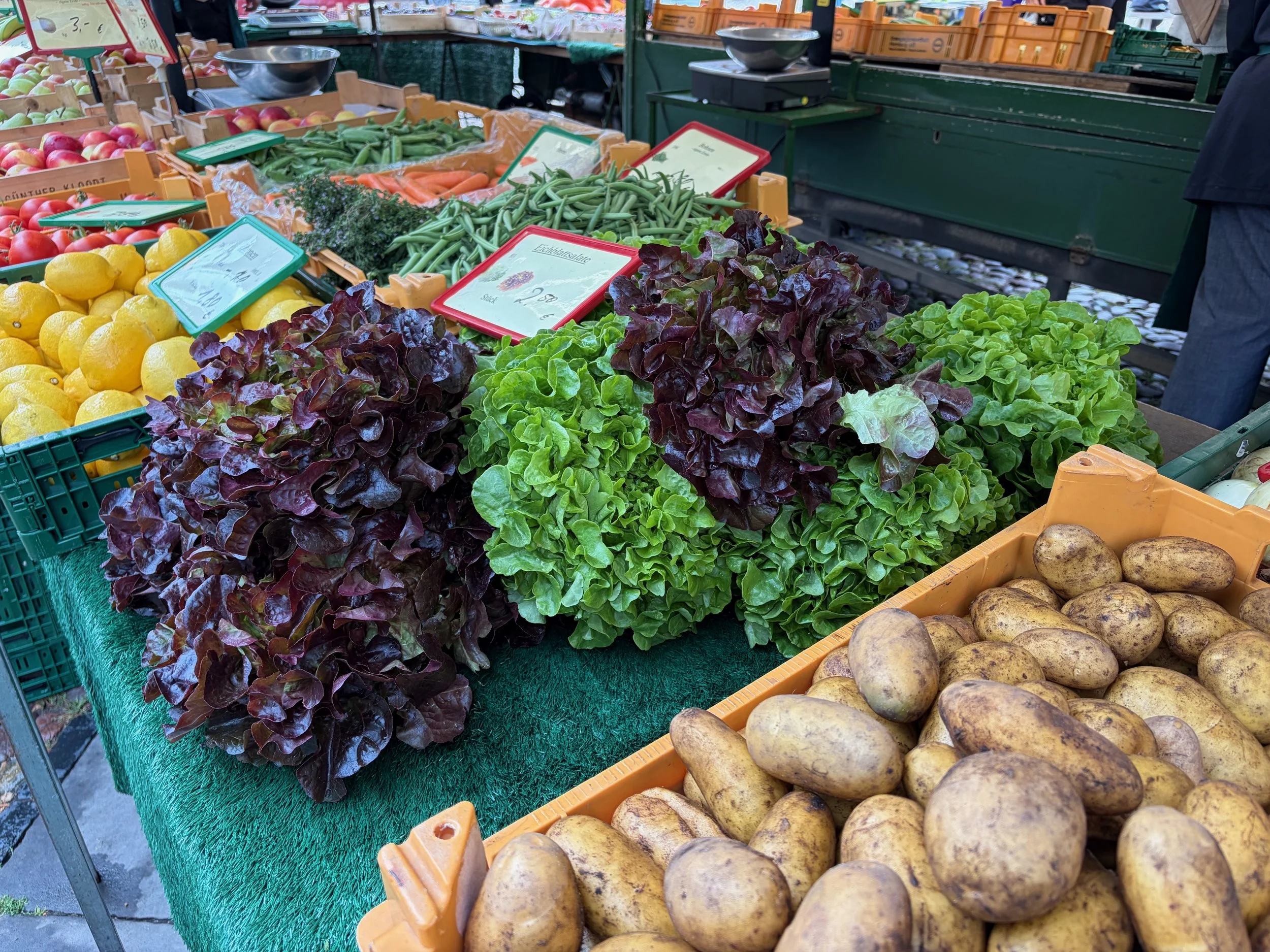
Fruit and vegetables for sale at the local farmers’ market in Lüneburg
It struck me immediately at the farmers’ market here in Lüneburg, Germany, where I am visiting for work, that the food for sale is almost identical to what’s on offer at the farmers’ markets back in Australia. I wonder what that means for native Australian bushfoods, for microbiomes, for biodiversity? Native Australian bushfoods are known to be highly nutritious, so why are they so lacking at our markets? Are the common foods at the farmers’ market, such as capsicum, broccoli, pumpkin, the ‘convenience foods’ of the fresh fruit and vegetable world? I think of local coastal and marine plants - seaweeds, pigface, saltbush - abundant and nutritious. Why am I not eating more of them?
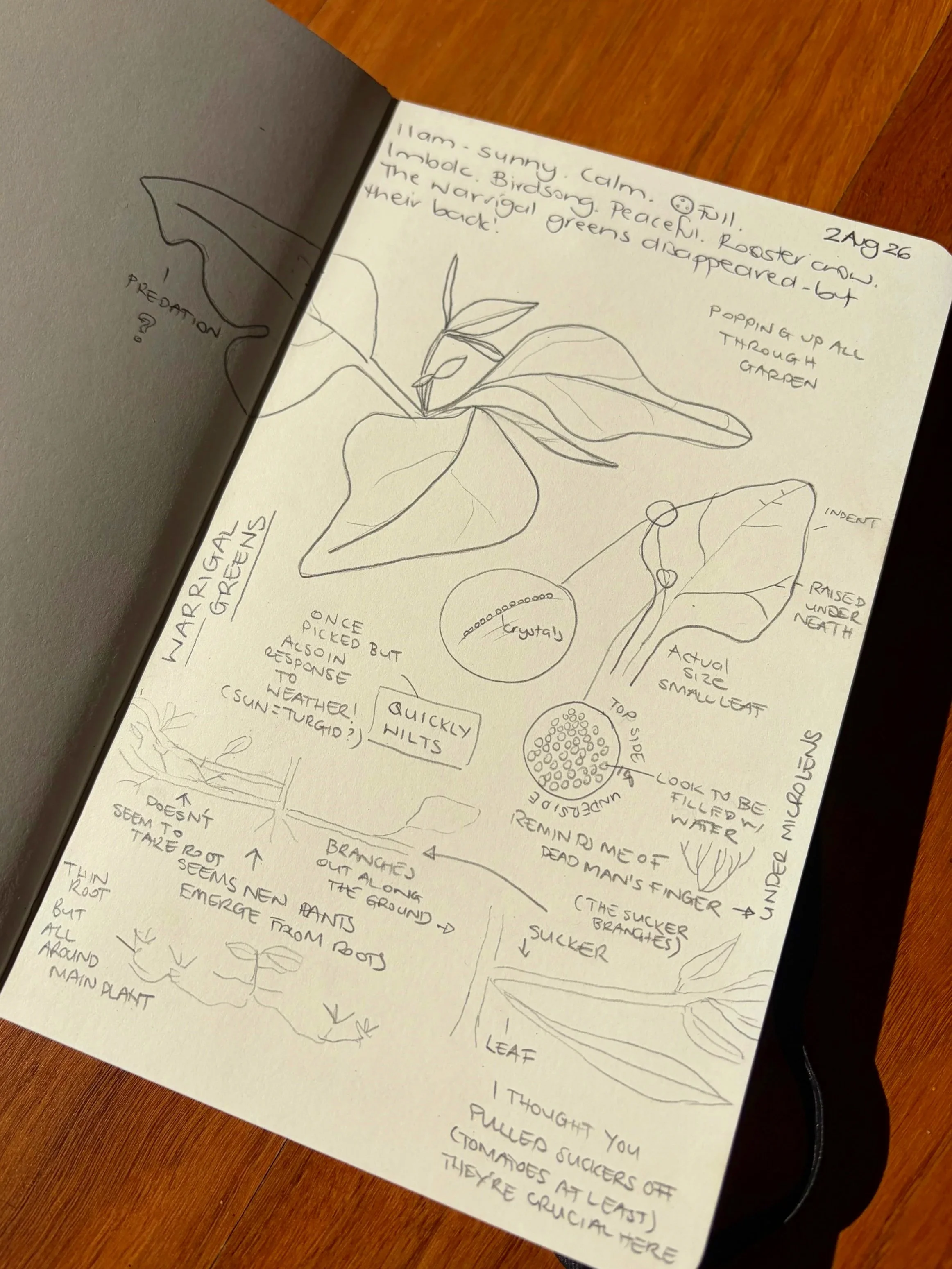
Field notes of warrigal greens (Tetragonia tetragonioides)
I must make it part of my practice. More native Australian edibles in my diet. A decolonisation of my diet. Warrigal greens are already growing in the garden, I could plant a fingerlime in the small orchard, throw some pigface into the native garden out the front, and possibly a Davidson Plum down by the lilly pillies (which are located along the westerly fire sector, providing some protection from wildfire and lots of shade in the summer).
I am sure that some of the reasons that the same foods exist at farmers’ markets here in Germany and in Australia is due to their ability to grow and the ease of transporting, storing and preparing them. Native warrigal greens, for example, need to be blanched before eating because of the presence of oxalates. Pumpkins do not! But somewhere along the way, did we become lazy? Did we decide that only foods that are immediately safe to consume should be prioritised?
Extracting the fruit from the pigface plant
I certainly gravitate towards foods that are familiar, easy to prepare, and for which I will know how to use. Anytime a kohlrabi arrives in a veggie box I get nervous! And at the local market in Indonesia I was overwhelmed by the difference and diversity of fruits, vegetables and other edibles for sale. Do we make safe and convenient food choices, even when working with fresh fruit at vegetables, and what is the cost?
Perhaps it would be interesting to try and include at least one local, native bushfood into my diet each week. Start to become familiar with learning when they are ready to harvest, how to prepare them, and even if they can be pickled or otherwise stored.
I did try recently to follow a recipe for ‘crispy’ dead man’s finger seaweed. Hmm, I realise how unappetising that sounds! Not sure what went wrong along the way, but they were too salty to be edible and definitely not crispy. Perhaps I should give it another try, first step will be figuring out how long to soak seaweed to get rid of the salt. I guess this is perhaps another challenge - when these foods are consumed less, the availability of recipes, and even knowledge on preparation, will be less available. The strategy must be then to expect some trial and error.
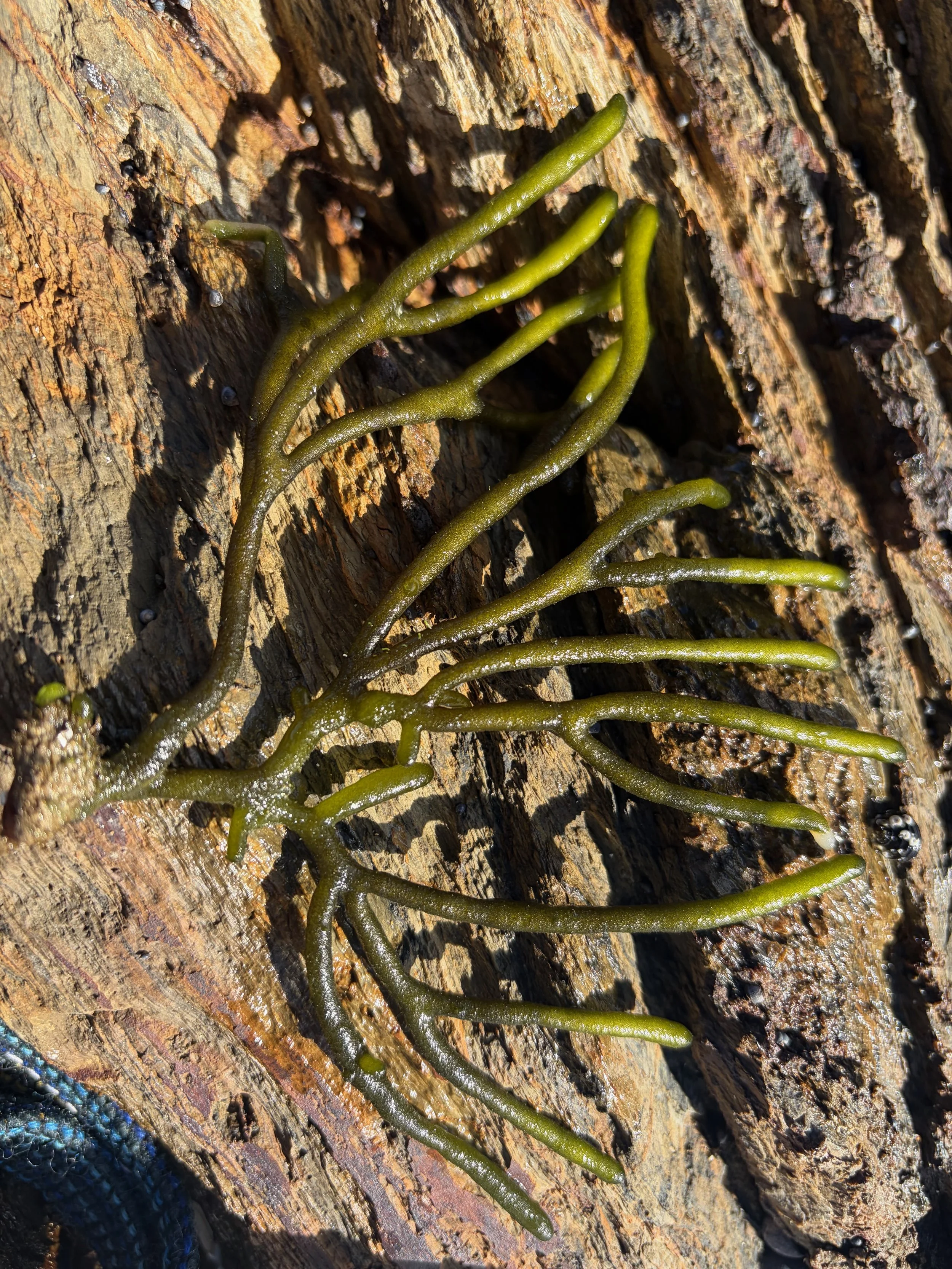
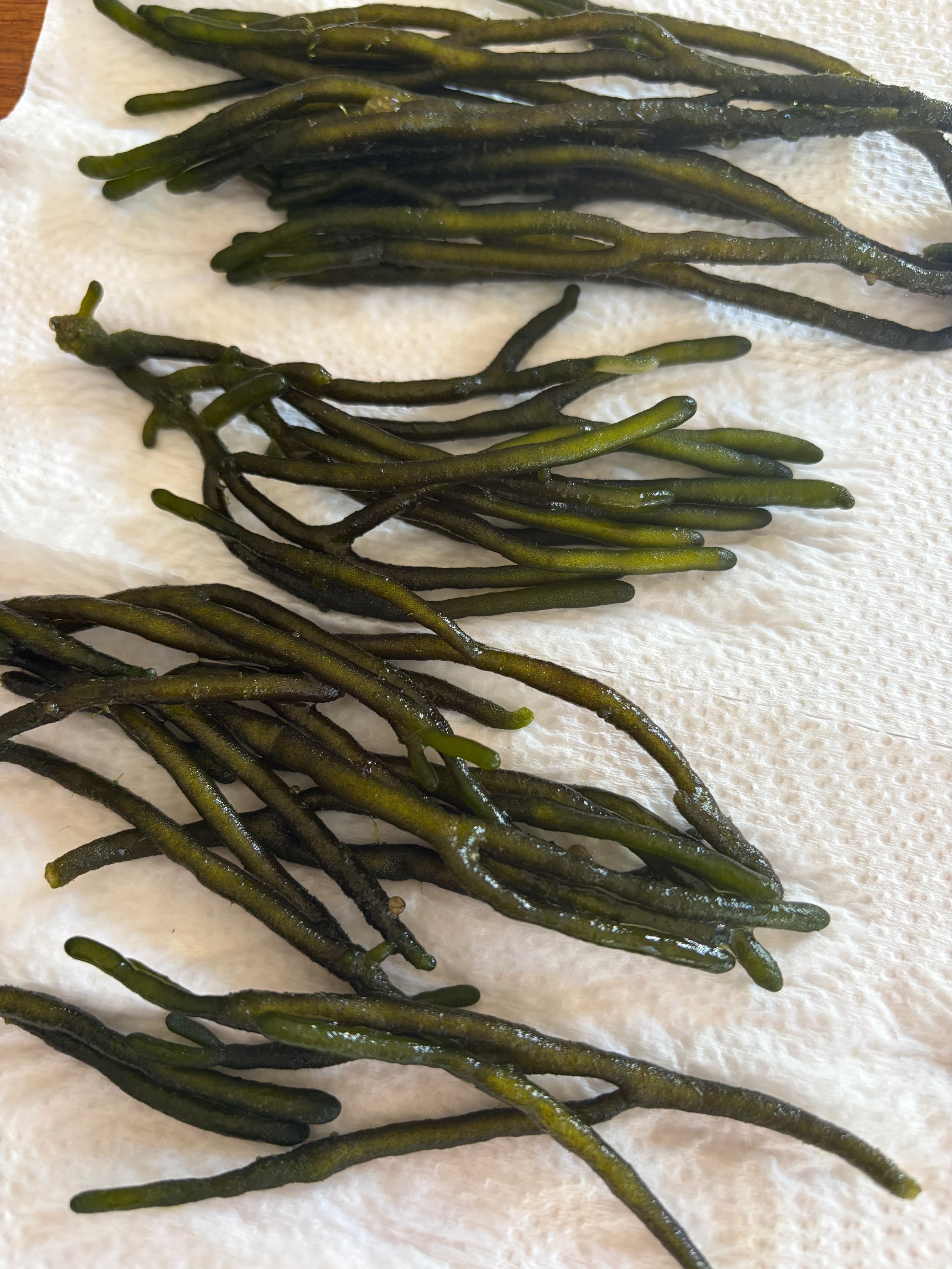
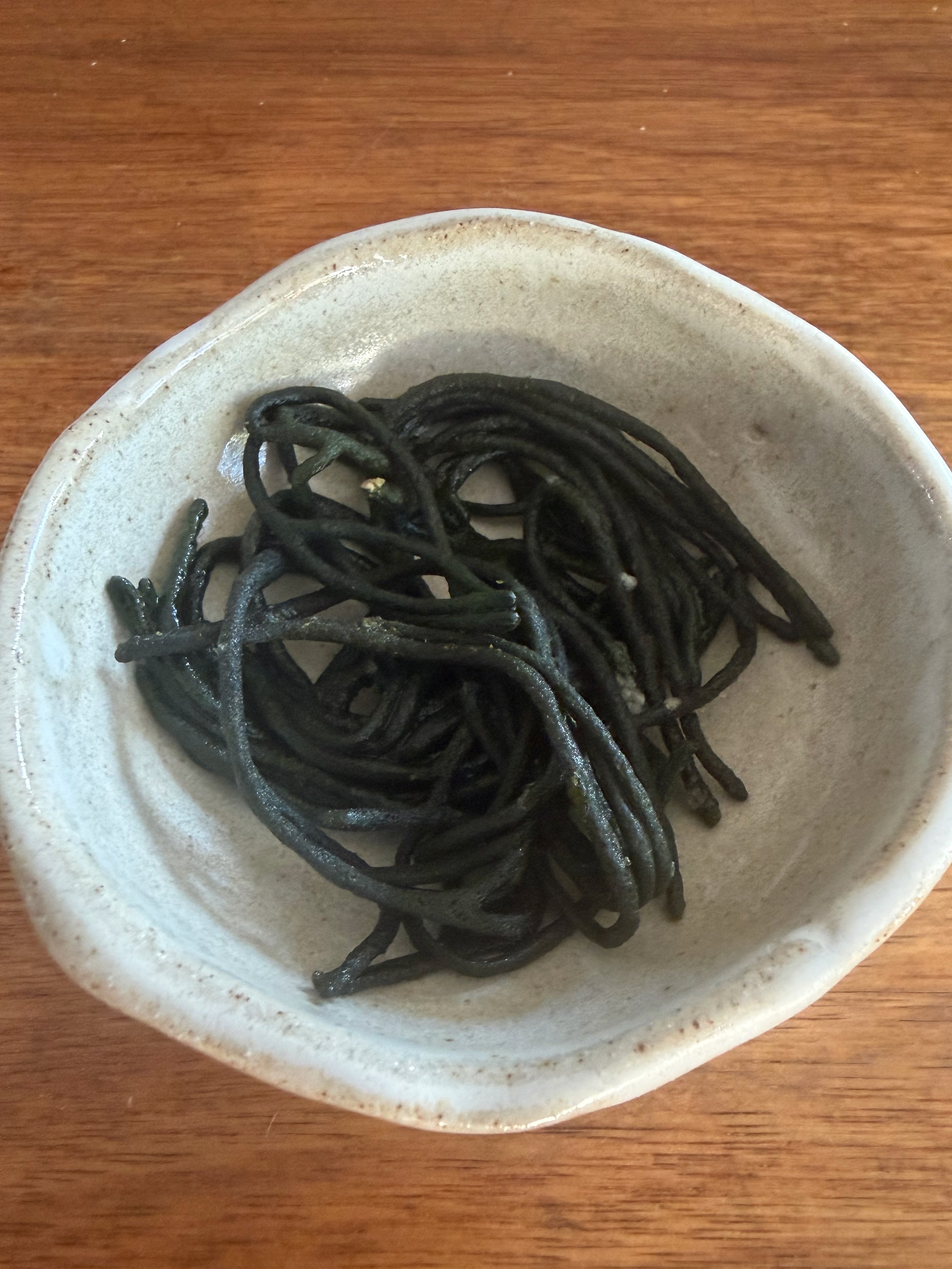
My attempt at roasting Codium fragile - dead man’s finger seaweed.